Decoding RNG Certification Standards for Multi-Jurisdictional French Roulette Variants in Licensed Digital Casinos
Hugo Klein · Aug 22, 2026
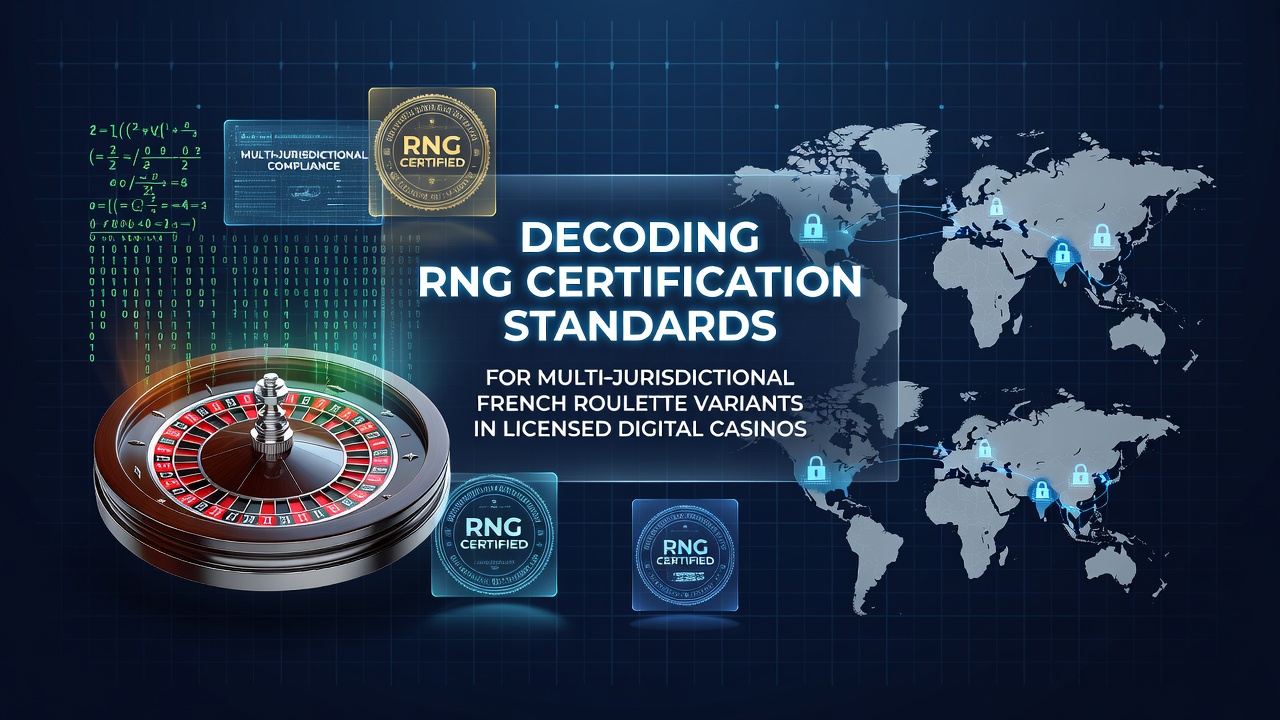
Decoding RNG Certification Standards for Multi-Jurisdictional French Roulette Variants in Licensed Digital Casinos
Random number generator certification forms the backbone of fair play in licensed digital casinos that offer French roulette variants across multiple regulatory jurisdictions, and observers note that these standards adapt to accommodate single-zero wheel mechanics alongside features like la partage and en prison rules. Licensed operators must demonstrate that their RNG systems produce outcomes independent of previous spins while meeting distinct technical requirements set by each authority where they hold permits, and data from testing laboratories shows that certification involves both statistical analysis and hardware verification processes that run continuously after initial approval.
Core Components of RNG Evaluation in Multi-Jurisdictional Settings
Testing agencies examine RNG algorithms for uniformity, unpredictability, and resistance to pattern detection, whereas French roulette variants require additional scrutiny because they incorporate specific betting options that interact with the wheel and ball simulation in precise ways. Laboratories apply suites of statistical tests including chi-square analysis, runs tests, and serial correlation checks to confirm that each number from zero through thirty-six appears with equal frequency over large sample sizes, and researchers have documented that these evaluations extend to the simulation of physical elements like rotor speed decay and ball bounce dynamics in virtual environments. Multi-jurisdictional platforms face the added requirement of aligning outputs with jurisdiction-specific rulesets, so certification reports often list compliance mappings that detail how the same RNG engine satisfies both a European licensing regime and an offshore framework simultaneously.
Key Certification Bodies and Their Distinct Protocols
Entities such as Gaming Laboratories International and iTech Labs conduct the bulk of RNG audits for operators serving European and international markets, while regional authorities in Malta and the Isle of Man impose supplementary layers of review that address local consumer protection mandates. The Malta Gaming Authority maintains technical standards that require RNG submissions to include source code reviews and live monitoring interfaces, and figures from industry reports indicate that operators typically undergo recertification every twelve to eighteen months depending on the volume of wagers processed. Observers note that August 2026 marks the scheduled rollout of updated interoperability guidelines among several European regulators, which aim to streamline cross-border recognition of existing test certificates without reducing the depth of statistical validation applied to roulette simulations.
Those who manage multi-jurisdictional licenses must coordinate submissions across different testing houses because each body applies its own threshold for acceptable deviation in long-run frequency distributions, and this coordination becomes especially relevant when French roulette variants introduce side bets or progressive jackpots that draw from the same underlying number stream. Certification documentation therefore includes detailed appendices that map every game mode to its corresponding regulatory clause, allowing licensing bodies to verify that no jurisdiction-specific constraint has been overlooked during implementation.
Technical Standards Applied to French Roulette Simulations
French roulette RNG systems undergo targeted evaluation of the zero pocket behavior because la partage and en prison rules alter the house edge calculation when the ball lands on zero, and certification protocols require separate verification that the RNG allocates the zero outcome at the mathematically correct rate before applying any rule-based adjustments. Laboratories generate millions of simulated spins during testing phases to confirm that the distribution remains stable across hardware platforms ranging from dedicated servers to cloud-based instances, and evidence from audit summaries shows that variance thresholds are set tighter for games that offer player-favorable rules like en prison compared with standard single-zero implementations.
Multi-jurisdictional operators often maintain separate RNG instances or configurable modules that toggle rule sets according to the player’s detected location, yet the underlying number generation must remain identical to preserve certification validity, and this architectural choice demands rigorous change-control documentation that auditors review during each renewal cycle. Data from compliance filings reveal that discrepancies in zero-hit frequency below one in several billion spins trigger mandatory retesting, regardless of which jurisdiction first flagged the anomaly.
Continuous Monitoring and Post-Certification Requirements
Once initial certification is granted, licensed casinos implement real-time monitoring dashboards that feed live spin data back to testing agencies or regulatory portals, allowing independent verification that production RNG behavior matches the certified baseline. Those responsible for compliance track metrics such as return-to-player percentages calculated over rolling thirty-day windows, and any deviation beyond predefined tolerances initiates an automatic review process that may require supplemental statistical sampling. Industry associations publish aggregated reports that compare certification outcomes across different roulette variants, and these documents help operators anticipate the documentation volume needed when expanding into a new licensing territory.
Conclusion
Certification frameworks for RNG systems supporting French roulette variants continue to evolve as regulators refine their technical expectations, and operators who navigate multiple jurisdictions maintain detailed mapping documents that align each regulatory clause with corresponding test results. The process centers on statistical validation, source-code scrutiny, and ongoing data feeds that together ensure every spin remains unpredictable and rule-compliant irrespective of the player’s geographic access point. As new harmonization measures take effect in August 2026, the emphasis on shared test recognition is expected to reduce redundant evaluations while preserving the integrity checks that protect both players and license holders.