Live Roulette Encounters Fresh AI-Driven Challenges in Casino Operations
Felix Butler · Aug 26, 2026

Live Roulette Encounters Fresh AI-Driven Challenges in Casino Operations
European casino operators now confront evolving risks tied to artificial intelligence applications in live roulette environments, where tools originally designed to streamline operations may simultaneously open pathways for advantage play and complicate standard anomaly detection protocols. The European Casino Association has recognized these dual-use aspects in recent statements, highlighting how AI systems intended for efficiency could also support sophisticated betting strategies that challenge traditional game integrity measures.
Understanding the Dual-Use Nature of AI in Roulette Settings
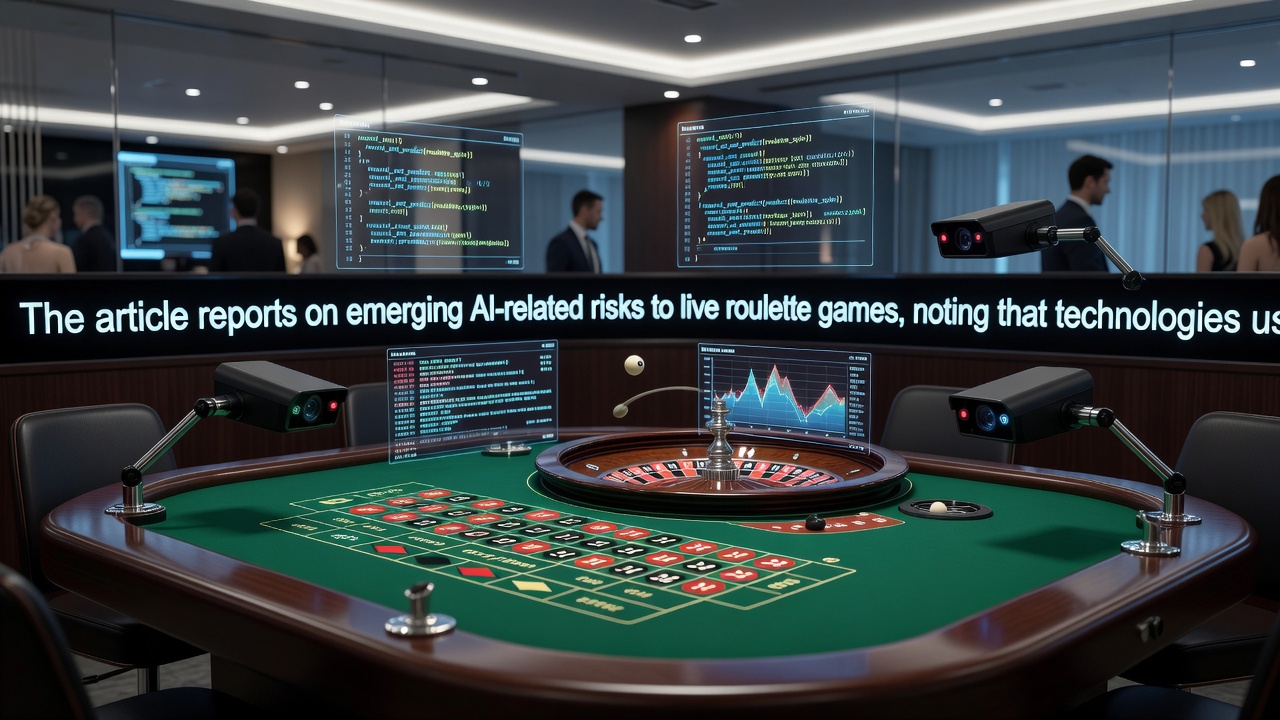
Technologies that monitor wheel performance, track betting patterns, and optimize table management carry inherent flexibility that extends beyond intended casino benefits, since the same data processing capabilities might enable players to identify predictable sequences or exploit timing vulnerabilities during spins. Observers note that anomaly detection algorithms, while useful for spotting irregularities in house procedures, present difficulties when external parties apply comparable methods to gain edges in real-time gameplay scenarios. This overlap creates operational tensions that industry groups continue to examine through structured discussions rather than immediate regulatory shifts.
European Casino Association Response to Emerging Concerns
The European Casino Association has acknowledged these overlapping risks without framing them as immediate crises, instead positioning them as topics requiring ongoing industry attention and collaborative strategy development. Association representatives have pointed to the need for balanced approaches that preserve operational advantages of AI while addressing potential misuse vectors in live table games specifically. Such recognition aligns with broader patterns where technological adoption in regulated gaming environments prompts reviews of existing security frameworks and player monitoring systems.
Upcoming Casino Industry Forum 2026 Focus Areas
Preparations for the Casino Industry Forum 2026, scheduled for October 18-20 in Benalmádena, include dedicated sessions examining AI applications and their effects on live table games including roulette variants. Forum organizers have structured these segments to explore practical implications for casino floors, where operators must weigh efficiency gains against vulnerabilities that advanced analytics might introduce. Attendees can expect presentations covering case examples of technology deployment, followed by panel exchanges on mitigation tactics that maintain game fairness standards across European jurisdictions.
Those following industry developments will find the October gathering serves as a key venue for sharing implementation data and assessing how different venues have responded to similar technological pressures in controlled settings. The timing allows participants to review progress on defensive adaptations before broader regulatory conversations intensify in subsequent years.
Defensive Technologies Addressing Wheel Clocking Risks
Manufacturers have introduced specific countermeasures such as Cammegh’s Random Rotor Speed system, which disrupts predictable wheel rotation patterns that players might otherwise attempt to clock through repeated observation or sensor-assisted analysis. This approach randomizes rotor velocity between spins in ways that reduce the reliability of timing-based advantage strategies while preserving core gameplay mechanics familiar to participants. Casino operators adopting these systems report integration with existing table hardware, allowing continued use of AI-enhanced monitoring tools without creating exploitable consistencies in physical wheel behavior.
Additional layers of protection under consideration include enhanced sensor arrays paired with real-time analytics that flag unusual betting concentrations faster than traditional oversight methods permit. These combined strategies reflect efforts to maintain equilibrium between technological progress and game protection priorities, particularly as AI capabilities expand across multiple operational domains within casino environments.
Industry Patterns in Technology Adoption and Risk Management
Historical shifts in casino technology demonstrate recurring cycles where innovations first appear as operational improvements before revealing secondary effects that require corrective measures. In roulette contexts, wheel clocking concerns have existed for decades through manual observation techniques, yet AI introduces scaled versions of these challenges by processing larger data volumes across multiple tables simultaneously. Industry responses therefore emphasize modular upgrades rather than wholesale replacements of current systems, enabling venues to test defensive tools incrementally.
Reports from various European venues indicate that early adopters of randomized rotor mechanisms have experienced measurable reductions in detectable patterns during internal audits, though comprehensive cross-jurisdiction data remains under collection ahead of the 2026 forum sessions. Such findings contribute to a growing repository of practical knowledge that operators reference when evaluating new installations or retrofits.
Conclusion
The intersection of AI capabilities with live roulette operations continues to prompt measured responses from associations, manufacturers, and event organizers focused on sustainable practices. The European Casino Association’s acknowledgment of dual-use risks, combined with targeted discussions planned for the Casino Industry Forum 2026 and the deployment of systems like Cammegh’s Random Rotor Speed technology, illustrates coordinated steps toward addressing these developments. As venues prepare for October gatherings in Benalmádena, the emphasis remains on factual assessment of technological impacts and the refinement of protective protocols that support both operational efficiency and game integrity across regulated markets.