The Interplay Between Roulette Ball Material Composition and Trajectory Consistency Across High-Volume Casino Floors
Felix Butler · Sep 5, 2026

The Interplay Between Roulette Ball Material Composition and Trajectory Consistency Across High-Volume Casino Floors
Modern roulette operations rely on precise equipment standards that shape how balls interact with wheels in busy environments, and material composition plays a central role in maintaining consistent trajectories over thousands of spins per day. Casino floors handling high volumes face constant variables from player traffic, climate control systems, and routine maintenance cycles, all of which influence ball behavior through friction, density, and surface wear. Data collected across regulated properties shows that ball composition directly affects bounce patterns and pocket entry angles, particularly when wheels operate under continuous rotation schedules.
Material Types and Their Physical Properties
Manufacturers produce roulette balls from phenolic resin, nylon composites, and earlier celluloid formulations, each carrying distinct density and hardness profiles that govern how the sphere responds to wheelhead contact. Phenolic resin balls, common in many North American installations, exhibit higher mass concentration near the core, which reduces deformation during repeated impacts against metal separators. In contrast, nylon-based options provide greater elasticity, allowing slight compression that can alter rebound angles when tables experience elevated humidity levels from crowded conditions. Research conducted by the University of Nevada, Las Vegas gaming laboratory indicates that these differences become measurable after approximately 500,000 spins, a threshold frequently reached within months on high-traffic floors.
Environmental Factors in Busy Casino Settings
High-volume casino floors maintain strict temperature and airflow protocols, yet localized variations still emerge near crowded tables where body heat and air conditioning drafts intersect. These microclimates affect ball surface friction, especially for materials that absorb minimal moisture versus those engineered for stability across broader humidity ranges. Observers note that balls composed of denser resins maintain more predictable deceleration curves when ambient conditions fluctuate between 20 and 24 degrees Celsius, a range typical in major resort properties. Studies tracking wheel performance across multiple jurisdictions reveal that trajectory deviations increase measurably during peak evening hours when table utilization exceeds 80 percent capacity.
Equipment rotation schedules further compound these effects, as wheels cycle through cleaning procedures that introduce trace residues capable of modifying surface grip. Properties in the United States adhere to standards outlined by the Nevada Gaming Control Board, which specifies replacement intervals based on documented spin counts rather than calendar time alone. Meanwhile, operators in other regions reference comparable guidelines that prioritize material-specific wear indicators to preserve outcome distribution integrity.
Trajectory Measurement and Consistency Data
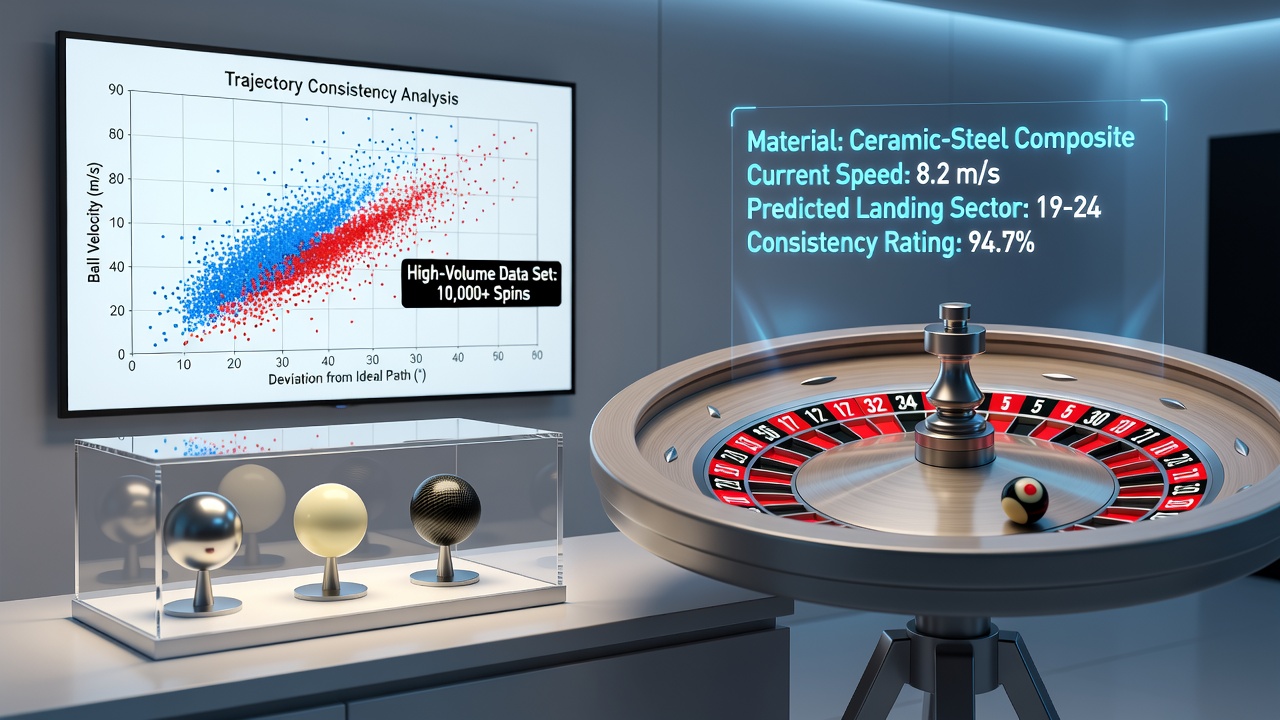
Advanced monitoring systems now capture spin data at multiple points along each rotation, recording velocity decay and deflection angles that correlate with ball material performance. Facilities utilizing automated tracking report that phenolic compositions produce narrower variance bands in pocket distribution compared with more elastic alternatives under identical wheel speeds. These patterns hold across extended sessions where cumulative spin counts reach into the millions, provided maintenance crews follow manufacturer-specified polishing intervals. Reports compiled by the Singapore Casino Regulatory Authority highlight similar findings from integrated resort operations, where material selection forms part of broader equipment certification protocols updated periodically to reflect operational data.
Maintenance Protocols and Replacement Cycles
Technicians calibrate wheels and inspect balls at fixed intervals determined by usage metrics rather than fixed dates, allowing properties to address early signs of surface abrasion before they influence trajectory. High-volume sites often maintain separate ball inventories segregated by composition type, rotating stock to equalize wear across sets. This approach minimizes cumulative drift in performance characteristics that might otherwise accumulate when a single material dominates daily operations. Calibration logs from multiple properties demonstrate that consistent application of these protocols sustains trajectory repeatability within established tolerance ranges even after extended operational periods.
Conclusion
Ball material composition intersects with operational variables in measurable ways that affect trajectory consistency on high-volume casino floors. Properties manage these factors through documented material specifications, environmental controls, and data-driven replacement schedules that align with regulatory requirements across different jurisdictions. Ongoing equipment monitoring continues to supply the information needed to maintain performance standards as usage patterns evolve.